


How Do Number Plates Work?
How Do Number Plates Work?
At first glance, number plates look pretty straightforward. A few letters, a few numbers, job done. But there’s actually a lot more going on behind that strip of plastic or metal on your car.
Number plates play a key role in how vehicles are identified, registered, and legally used on UK roads. They link your vehicle to DVLA records, insurance, MOT history, and more. Understanding how they work can help you avoid fines, MOT issues, or accidentally fitting a plate that is not road compliant.
Every vehicle registered in the UK is assigned a registration number by the DVLA. That registration stays with the vehicle, but the physical number plate itself is something you buy and replace when needed.
What Information Does a Number Plate Contain?
UK number plates can look like a random mix of letters and numbers, especially if you’re not familiar with how they’re structured. In reality, there’s a clear system behind them, and each part of the registration tells you something useful.
The Current UK Number Plate Format (Post-2001)
Most vehicles on the road today use the modern format, which looks like this:
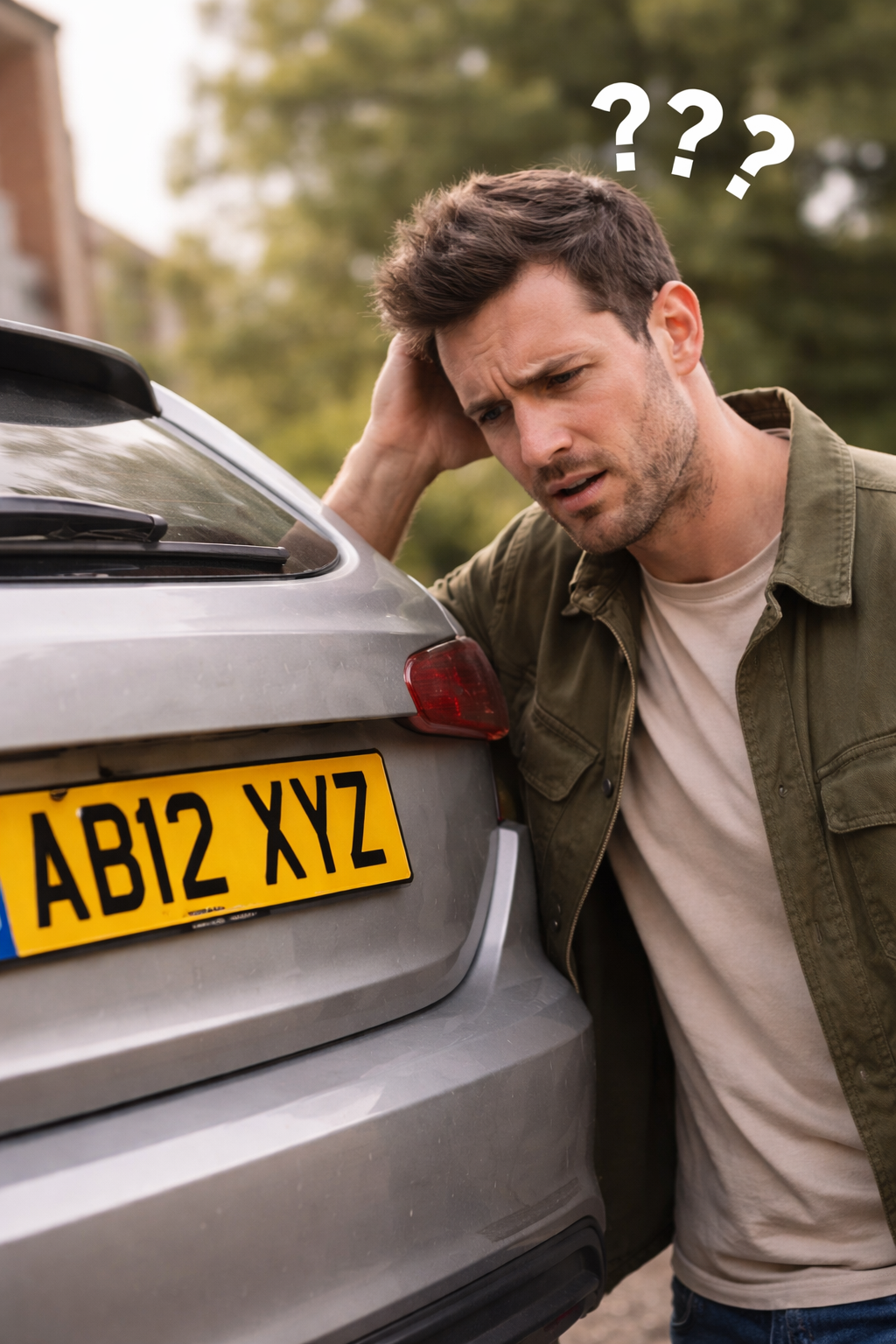
AB12 CDE – Each section has a specific meaning.
The first two letters (AB) – These are known as the area code. They show where the vehicle was first registered. For example, plates starting with L are linked to London, while M is associated with Manchester.
The two numbers (12) – This is the age identifier. It tells you when the vehicle was first registered. New identifiers are released twice a year, in March and September. A plate with “12” was registered between March and August 2012.
The final three letters (CDE) – These letters are randomly assigned. Their only job is to make the registration unique.
Once you know this, modern plates start to make a lot more sense.
Older Number Plate Formats (Pre-2001)
Before the current system was introduced, UK plates followed a couple of different formats that you’ll still see on older vehicles.
Prefix plates – These look like R123 ABC. The first letter indicates the year the vehicle was registered.
Suffix plates – These look like ABC 123R. In this case, the final letter shows the year.
These older styles are often seen on classic cars and vintage vehicles.
Motorbike Number Plates
Motorbikes use the same registration formats as cars, but the plates themselves are different. Motorbike plates are smaller and are usually fitted to the rear only. They still need to follow DVLA rules on font, spacing, and visibility to be road legal.
Private or Personalised Plates
Private registrations are designed to look like names, words, or phrases. While they might appear different, they still have to follow strict rules if they’re being used on the road.
Spacing, font style, and layout must all stay compliant. If those rules are broken, the plate becomes illegal for road use. Some people choose to push those limits for display purposes only, using show plates rather than road plates.
Why Are Number Plates So Important?
Number plates aren’t just something you bolt onto the front and back of your car and forget about. They serve an important purpose, and not understanding that purpose can land you in trouble when it comes to buying, fitting, or replacing them.
Legal Compliance
Every vehicle on UK roads must display number plates correctly. That means a plate on the front and rear of cars, and a rear plate only for motorcycles.
Those plates must meet DVLA rules around font, spacing, size, layout, and reflectivity. Driving without a number plate, or with one that doesn’t meet the regulations, can result in fines of up to £1,000. Not exactly a mistake you want to make over something so avoidable.
ANPR and Law Enforcement
Number plates allow vehicles to be identified using Automatic Number Plate Recognition (ANPR) systems. These are used by police, councils, and toll operators across the UK.
ANPR helps with:
- Identifying uninsured or untaxed vehicles
- Locating stolen cars
- Enforcing congestion charges, clean air zones, and speed limits
It might not sound glamorous, but it’s one of the main reasons plates need to be clear, readable, and correctly formatted.
MOT and Insurance
Your number plate is part of your vehicle’s official identity. If it’s cracked, faded, peeling, or incorrectly spaced, your vehicle can fail its MOT.
Poor or illegal plates can also cause issues with insurance claims, especially if your vehicle can’t be clearly identified following an incident.
Buying and Selling Vehicles
Your registration number links directly to your vehicle’s history, including tax status, MOT records, insurance, and ownership details.
When buying or selling a vehicle, the number plate is how that information is checked and verified. Without it, or with an incorrect plate fitted, things can quickly get complicated.
Need a New Number Plate?
Whether you’re replacing a damaged plate, ordering a new standard set, or upgrading to a 3D or 4D style, we make it easy to get plates that look good and meet the rules.
Explore our full range and build your number plates in minutes.